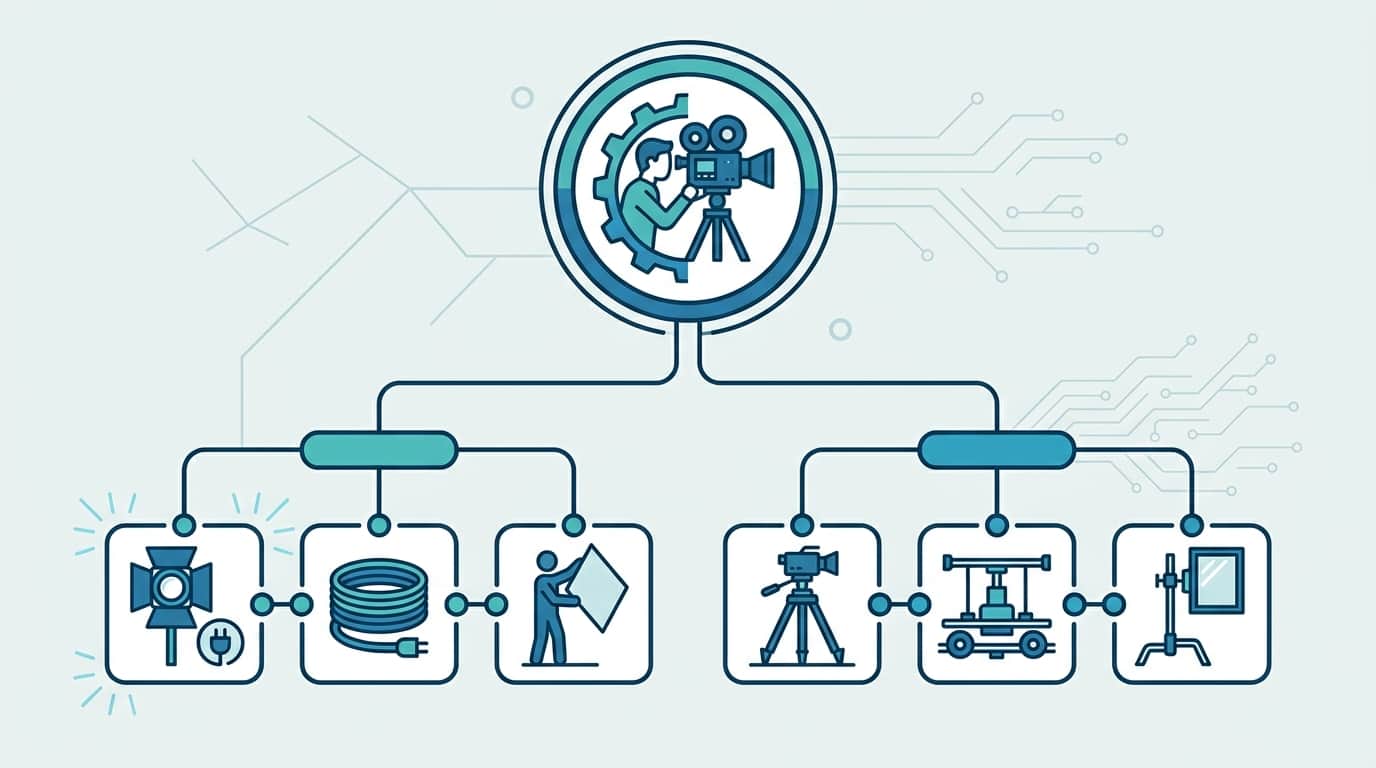
The difference between gaffer and grip in Orlando film sets comes down to electricity versus rigging. Gaffers design and execute the electrical lighting plan. Grips safely rig the heavy camera equipment and manipulate the shadows. If you need top-tier gear for your next production, contact Tiki Grip & Electric at (407) 491-0268.
Our team knows how critical this division of labor is for efficient filmmaking. When you blur these roles, you risk blown circuits and unsafe sets. Directors of photography rely on both departments to bring their visual ideas to life safely and on schedule.
What Does a Gaffer Do on Set?
A gaffer serves as the chief lighting technician, managing all electrical distribution and light placement on a film set. They work directly with the director of photography to select the right fixtures, calculate power loads, and balance color temperatures across the scene.
In our 35 years in production, we typically find that a good gaffer makes or breaks the shooting schedule. They handle the complex math of electrical distribution. If a scene requires a 4K HMI Faceted Par; the gaffer knows that unit costs around $625 per day to rent and requires a dedicated power source. They will map out the cable runs, set up the distribution boxes, and ensure the entire electrical system operates safely.
Gaffers also select the specific lighting instruments. They might choose an Astera Titan Kit for colorful background accents or an Aputure 1200X to push intense daylight through a window. The gaffer instructs their electrical team on exactly where to place these lights and what intensity level to set.
What Are the Primary Duties of a Grip?
A grip builds the non-electrical support gear that shapes the light and moves the camera. They set up C-stands, overhead rags, and dollies while ensuring all heavy equipment remains securely rigged and safe for the crew.
While the gaffer points the light, the grip controls where that light spills. They set up 4X floppies and 2×3 solids to cut light off the walls. They also build the camera support systems. If the director wants a smooth tracking shot, the grip builds the Dana Dolly on 8-foot rails.
This requires serious hardware. Productions regularly secure grip equipment rentals to handle the workload. A fully loaded 4-ton G&E truck typically runs $600 per day plus $1.10 per mile. That package includes essential rigging tools like triple riser combos, sandbags, apple boxes, and frame corners. Grips use these tools to build temporary structures that manipulate sunlight or diffuse heavy artificial light.
Micro-Case Study: The Difference Between Gaffer and Grip in Orlando
The true difference between gaffer and grip in Orlando shows up during complex location shoots. Last month, we supported a commercial production near Lake Eola. The gaffer and grip had to work together to execute a difficult exterior shot under harsh afternoon sunlight.
The gaffer designed the lighting plan. They calculated the power draw needed for two Aputure 1200D units to fight the harsh Florida sun. They then safely routed 50-foot Bates cables from an EcoFlow Delta Pro Battery Generator to power the units.
The grips took over the shadow manipulation and safety rigging. They flew a 12×12 Grid Silent rag over the talent to soften the harsh overhead sunlight. Because of the heavy wind coming off the lake, the grips tied down the frames with heavy ropes and secured the stands with 35-pound sandbags. They also leveled a doorway dolly on the uneven grass so the camera operator could track alongside the actors.
This scenario clarifies the boundary lines. The gaffer handled the active light sources and the power grid. The grips shaped that light, blocked the wind, and provided the camera movement platform.
Why Do Florida Filmmakers Need Clear Set Hierarchies?
Clear set roles prevent safety hazards and save thousands of dollars in lost production time. When shooting outdoors in Central Florida, crews battle unpredictable 90-degree heat and sudden afternoon thunderstorms. You need specialized experts who can move fast and secure equipment safely.
Understanding the difference between gaffer and grip in Orlando helps junior producers hire the right crew for the job. You do not want an electrician trying to rig a 20-foot overhead frame over actors when a storm is blowing in. You also do not want a grip calculating amperage for a Honda 7000 generator near a historic home in Winter Park.
Working in tight locations requires discipline. If you are shooting inside a high-rise condo in downtown Orlando, space is extremely limited. The gaffer needs to know exactly which circuits can handle an Aputure 600C without tripping the breakers. The grip needs to know how to tension a wall spreader safely without damaging the drywall. When everyone stays in their lane, the production moves 40% faster.
Securing the Right Gear for Your Next Shoot
A well-equipped crew requires reliable gear to execute the director of photography's vision. When you understand the difference between gaffer and grip in Orlando, you can properly stock your grip truck and lighting package.
Whether you need a simple Astera NYX Bulb Kit or a massive 12×12 unbleached muslin rag, Tiki Grip & Electric provides meticulously maintained equipment. Our owner, Martin Everett, brings decades of lighting experience to help you select the exact tools your crew needs.
Do not leave your next production to chance. Ensure your gaffers and grips have the industry-standard tools required to work safely and efficiently. Contact Tiki Grip & Electric at (407) 491-0268 to book your truck package today.